Saturday, 30 December 2017
ARTICLE OF THE DAY
Porcupines are rodentian mammals with a coat of sharp spines, or quills, that protect against predators. The term covers two families of animals, the Old World porcupines of family Hystricidae, and the New World porcupines of family Erethizontidae. Both families belong to the clade Hystricognathi within the profoundly diverse order Rodentia and display superficially similar coats of quills: despite this, the two groups are distinct from each other and are not closely related to each other within the Hystricognathi.
The Old World porcupines live in southern Europe, Asia (western[1] and southern), and most of Africa. They are large, terrestrial, and strictly nocturnal. In taxonomic terms, they form the family Hystricidae.
The New World porcupines are indigenous to North America and northern South America. They live in wooded areas and can climb trees, where some species spend their entire lives. They are less strictly nocturnal than their Old World relatives, and generally smaller. In taxonomic terms, they form the family Erethizontidae.
Porcupines are the third-largest of the rodents, behind the capybara and the beaver. Most porcupines are about 60–90 cm (25–36 in) long, with an 20–25 cm (8–10 in) long tail. Weighing 5–16 kg (12–35 lb), they are rounded, large, and slow, and use aposematic strategy of defense. Porcupines occur in various shades of brown, gray, and white. Porcupines' spiny protection resembles that of the unrelated erinaceomorph hedgehogs and Australian spiny anteaters or monotreme echidnas.
WORD OF THE DAY
sacrilege
(ˈsækrɪlɪdʒ)
n
Meaning
1. the misuse or desecration of anything regarded as sacred or as worthy of extreme respect: to play Mozart's music on a kazoo is sacrilege.
2. the act or an instance of taking anything sacred for secular use.
Synonyms:
1. desecration, violation, blasphemy, mockery, heresy, irreverence, profanity, impiety, profanation, profaneness
2. disrespect, contempt, disregard, dishonour, lack of respect, irreverence, impertinence, discourtesy
Antonyms:
Usage:
1. Stealing from a place of worship was considered a sacrilege. 2. It is a sacrilege to offend democracy.
Wednesday, 19 July 2017
TODAY'S HOLIDAY
Swan Upping
Third week in July
Third week in July
The tradition of marking newborn swans goes back six centuries, to a time when most of the swans on England's public waters were owned by the queen. Later the members of two livery companies (trade guilds), the Company of Dyers and the Company of Vintners, were given the right to keep swans on the Thames River between London and Henley.
Every year since 1363, the Queen's swan master and the swan wardens of the two livery companies row up the Thames, starting at Blackfriars in the center of London and continuing upstream to Abingdon, and "up" all the swan families into the boats, where they are marked with identification numbers. There are very specific rules governing how ownership is decided, and the six boats, each flying a large silk flag as they row up the river, form a procession that has changed little over the centuries
TODAY'S BIRTHDAY
Charles Horace Mayo (1865)
Charles Horace Mayo, M.D. (July 19, 1865 – May 26, 1939) was an American medical practitioner and was one of the founders of the Mayo Clinic along with his brother, William James Mayo, Drs. Augustus Stinchfield, Christopher Graham, E. Star Judd, Henry Stanley Plummer, Melvin Millet and Donald Balfour.
THIS DAY IN HISTORY
France Declares War on Prussia (1870)
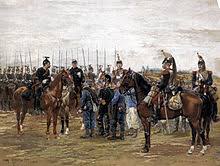
The Franco-Prussian War or Franco-German War (German: Deutsch–Französischer Krieg), often referred to in France as the War of 1870 (19 July 1870 – 10 May 1871), was a significant conflict pitting the Second French Empire against the Kingdom of Prussia and its allies in the North German Confederation, as well as the South German states of Baden, Württemberg, Bavaria and Hesse-Darmstadt.
The conflict emerged from tensions regarding the German unification. A war against France was deemed necessary to unite the North German Confederation and the independent southern German states, while France was preoccupied by the emergence of a powerful Prussia. Napoleon III seized on a supposed insult in the Ems Dispatch to declare war, which most French leaders expected to win.
The German coalition quickly took charge. Its forces were superior, due to much better training and leadership, and more effective use of modern technology. A series of swift Prussian and German victories in eastern France culminating in the Battle of Sedan, saw Napoleon III and his whole army captured on 2 September. Yet this did not end the war, as the Third Republic was declared in Paris on 4 September 1870 and French resistance continued under the Government of National Defence and Adolphe Thiers. Over a five-month campaign, the German forces defeated the newly recruited French armies in a series of battles fought across northern France. Following a prolonged siege, noted for the first use of anti-air artillery (against French balloons), Paris fell on 28 January 1871. The German states proclaimed their union as the German Empire under the Prussian king, Wilhelm I, uniting Germany as a nation-state. The final Treaty of Frankfurt of 10 May 1871 gave Germany most of Alsace and some parts of Lorraine which became the Imperial territory of Alsace-Lorraine.
Following defeat, a left-wing revolt broke out in Paris against the new French republic. Known as the Paris Commune, it was a landmark event in the revolutionary seizure of power by the masses, but it was harshly crushed. The unification of Germany into an empire in its own right, with the newly industrialization of the nation, shifted the European balance of power and under Otto von Bismarck maintained great authority in international affairs for two decades. However, France was determined to regain Alsace-Lorraine; it and Germany were constantly poised for war.
ARTICLE OF THE DAY
Murano glass is a famous product of the Venetian island of Murano. Located off the shore of Venice, Italy, Murano has been a commercial port as far back as the 7th century. By the 10th century, the city had become well known for its glassmakers, who created unique Murano glass. While Murano glassmakers have settled and operate elsewhere, some say authentic Murano glass is fabricated only in Murano.
WORD OF THE DAY
re·pose
(rĭ-pōz′)
n.
1. The act of resting or the state of being at rest.
2. Freedom from worry; peace of mind.
3. Calmness; tranquility.
v. re·posed, re·pos·ing, re·pos·es
v.tr.
1. To lay (oneself) down.
2. To rest or relax (oneself).
v.intr.
1. To lie at rest.
2. To lie dead: repose in a grave.
3. To lie while being supported by something.
Synonyms:
ease, relaxation, rest
Usage:
The vacationer took his repose beside the swimming pool.
Sunday, 2 July 2017
LECTURE NOTE OF THE DAY (PHYSICS)
Electrostatics
Download the note here
In this lesson on Electrostatics we focus on the following:
Electrostatics and types of charges, electric fields, properties and
strength, conservation of charge, Coulomb s Law of electrostatics,
electrical potential energy and potential difference.
Download the note here
In this lesson on Electrostatics we focus on the following:
Electrostatics and types of charges, electric fields, properties and
strength, conservation of charge, Coulomb s Law of electrostatics,
electrical potential energy and potential difference.
In this lesson on Electrostatics we focus on the following:
Electrostatics and types of charges, electric fields, properties and
strength, conservation of charge, Coulomb s Law of electrostatics,
electrical potential energy and potential difference.
TODAY'S HOLIDAY
Fillmore Jazz Festival
The Fillmore Jazz Festival is a free outdoor event held on the Saturday and Sunday closest to Independence Day, July 4. This annual celebration of jazz music and culture on San Francisco's historic Fillmore Street draws an average of 90,000 visitors each year.
Historical Background
San Francisco's ethnically diverse Fillmore neighborhood has a long and colorful history. Known as "the Fillmore," the neighborhood has been the scene of important moments in jazz and rock music history. After San Francisco was devastated by a major fire and earthquake in 1906, rebuilding efforts transformed Fillmore Street into an entertainment district. Many theaters were built for public performances, and young artists, such as Al Jolson, began their careers there in the 1920s and 1930s.
Jazz reigned on Fillmore Street throughout the World War II years. Dozens of jazz nightclubs opened on Fillmore Street. These clubs featured performances by well-known artists such as Ella Fitzgerald, Count Basie, Duke Ellington, John Coltrane, Charlie Parker, Louis Armstrong and Billie Holiday (see also Charlie Parker Jazz Festival and Satchmo SummerFest). During the 1960s the neighborhood became a haven for artists representing all forms of entertainment, including writers, actors, and musicians of all types.
The Fillmore has developed into one of the most culturally diverse neighborhoods in the U.S., becoming home to communities of Filipino, Mexican, African-American, Japanese, Russian, and Jewish residents. The neighborhood, which has always included a mix of homes and businesses, was revitalized by an infusion of new development in the 1980s. In 1999 the Fillmore Jazz Preservation District was dedicated in recognition of the street's history as a cultural landmark. The neighborhood now hosts a wide variety of gourmet restaurants, boutiques, and specialty shops, including Marcus Books, the nation's largest African-American bookstore. Today, Fillmore Street continues its long tradition of celebrating art and culture by hosting numerous festivals and street fairs throughout the year.
Creation of the Festival
The Fillmore Merchants Association helped to launch the first Fillmore Jazz Festival in 1985. The festival was intended to celebrate the roots of jazz and the importance of the Fillmore Street nightclubs during the early days of jazz music. In its first year, the festival was held on three blocks of Fillmore Street and showcased all forms of jazz from fusion to Latin, as well as jazz standards.
African Americans and Jazz
Jazz began as a distinctly African-American musical genre, developing from two older styles of African-American music - blues and ragtime. The roots of the jazz sound can be traced even farther back to African rhythms, drums, calland-response singing, foot stomping, and hand clapping. These musical elements became part of the essential foundation of jazz music. They were layered with more complex sounds to create the modern variations of jazz heard today.
The first African-American jazz bands were formed in New Orleans, Louisiana, in the early 1900s. As jazz grew in popularity throughout the country, AfricanAmerican musicians traveled to different cities to perform. By the 1920s, jazz clubs were opening in many larger cities such as Chicago, New York, and Los Angeles. Once jazz spread geographically, rather than remaining concentrated mostly in one city, different forms of jazz music began to emerge. AfricanAmerican musicians created new styles of jazz as the genre evolved. Louis Armstrong pioneered the jazz solo in the 1920s, and in the 1930s, musicians like Duke Ellington and Count Basie popularized the big band swing jazz sound. By the mid-1940s, Dizzy Gillespie, Charlie Parker, and Thelonius Monk were focusing on smaller bands and an innovative performance style that became known as bebop. The 1960s saw the emergence of fusion, free jazz, and cool jazz that was played by such artists as Miles Davis and Ornette Coleman. More recently, jazz musicians like Wynton Marsalis are reviving the more traditional styles heard in the early days of jazz.
Observance
The Fillmore Jazz Festival is widely considered to be the largest free jazz festival on the West Coast. Now organized by Hartmann Studios, an event production company, the festival has grown to include more than 13 city blocks and three stages of continuous music. Performers representing the entire spectrum of jazz music are showcased during the twoday event. In addition to nonstop music, the festival also includes eight city blocks of arts, crafts, and other merchandise for sale. Hundreds of vendors sell clothing, jewelry, art, home furnishings, and food.
TODAY'S BIRTHDAY
Hermann Hesse (1877)
Hermann Hesse (German: [ˈhɛɐ̯man ˈhɛsə]; July 2, 1877 – August 9, 1962) was a German-born, Swiss poet, novelist, and painter. His best-known works include Steppenwolf, Siddhartha, and The Glass Bead Game, each of which explores an individual's search for authenticity, self-knowledge and spirituality. In 1946, he received the Nobel Prize in Literature.
THIS DAY IN HISTORY
First Wal-Mart Store Opens in Rogers, Arkansas (1962)
Wal-Mart Stores, Inc., branded as Walmart, is an American multinational retail corporation that runs chains of large discount department stores and warehouse stores. The company is the world's third largest public corporation, according to the Fortune Global 500 list in 2012, the biggest private employer in the world with over two million employees, and is the largest retailer in the world. Walmart remains a family-owned business, as the company is controlled by the Walton family, who own a 48 percent stake in Walmart. It is also one of the world's most valuable companies.
The company was founded by Sam Walton in 1962, incorporated on October 31, 1969, and publicly traded on the New York Stock Exchange in 1972. It is headquartered in Bentonville, Arkansas. Walmart is also the largest grocery retailer in the United States. In 2009, it generated 51 percent of its US$258 billion sales in the U.S. from grocery business. It also owns and operates the Sam's Club retail warehouses in North America.
In the late 1980s and early 1990s the company rose from a regional to national giant. By 1988, Wal-Mart was the most profitable retailer in the US and by October 1989 it had become the largest in terms of revenue. Geographically limited to the South and Lower Midwest up to the mid 1980s, by the early 1990s Walmart's presence spanned coast to coast - Sam's Club opened in New Jersey in November 1989 and the first California outlet opened in Lancaster on July 28, 1990. A Walmart in York, Pennsylvania was opened in October 1990 bringing the main store into the Northeast.
Walmart has 8,500 stores in 15 countries, under 55 different names. The company operates under the Walmart name in the United States, including the 50 states and Puerto Rico. It operates in Mexico as Walmex, in the United Kingdom as Asda, in Japan as Seiyu, and in India as Best Price. It has wholly owned operations in Argentina, Brazil, and Canada. Walmart's investments outside North America have had mixed results: its operations in the United Kingdom, South America, and China are highly successful, whereas ventures in Germany and South Korea were unsuccessful.
ARTICLE OF THE DAY
Durian
The durian /ˈdjʊriən/ is the fruit of several tree species belonging to the genus Durio and the family Malvaceae (although some taxonomists place Durio in a distinct family, Durionaceae).
Regarded by many people in southeast Asia as the "king of fruits", the durian is distinctive for its large size, strong odour, and formidable thorn-covered husk. The fruit can grow as large as 30 centimetres (12 in) long and 15 centimetres (6 in) in diameter, and it typically weighs one to three kilograms (2 to 7 lb). Its shape ranges from oblong to round, the colour of its husk green to brown, and its flesh pale yellow to red, depending on the species.
The edible flesh emits a distinctive odour that is strong and penetrating even when the husk is intact. Some people regard the durian as pleasantly fragrant; others find the aroma overpowering and revolting. The smell evokes reactions from deep appreciation to intense disgust, and has been described variously as almonds, rotten onions, turpentine, raw sewage. The persistence of its odour has led to the fruit's banishment from certain hotels and public transportation in southeast Asia.
The durian, native to southeast Asia has been known to the Western world for about 600 years. The nineteenth-century British naturalist Alfred Russel Wallace famously described its flesh as "a rich custard highly flavoured with almonds". The flesh can be consumed at various stages of ripeness, and it is used to flavour a wide variety of savoury and sweet edibles in Southeast Asian cuisines. The seeds can also be eaten when cooked.
There are 30 recognised Durio species, at least nine of which produce edible fruit. Durio zibethinus is the only species available in the international market: other species are sold in their local regions. There are hundreds of durian cultivars; many consumers express preferences for specific cultivars, which fetch higher prices in the market.
WORD OF THE DAY
o·rac·u·lar
(ô-răk′yə-lər, ō-răk′-)
adj.
1. Of, relating to, or being an oracle.
2. Resembling or characteristic of an oracle:
a. Solemnly prophetic.
b. Enigmatic; obscure.
Synonyms:
enigmatic
Usage:
As the teacher read aloud, enchanted by the oracular sayings of Victorian poets, the class became progressively more confused.
Saturday, 1 July 2017
TODAY'S HOLIDAY
Honk Kong Special Administrative Region Establishment Day
July 1
July 1
Formerly an occupied territory of the United Kingdom, Hong Kong became a Special Administrative Region (SAR) of China on July 1, 1997. The day is reserved for official celebrations of Hong Kong and its unique "one country, two systems" arrangement with its mainland ally.
Large crowds observe the anniversary by turning out for an official flag-raising ceremony displaying the emblems of Hong Kong and the People's Republic of China. There is also a parade featuring traditional drumming performances and dragon dance troupes. For the 10th anniversary in 2007, the regional government coordinated a series of events, including a ceremony that swore in Hong Kong's new chief executive, Donald Tsang.
An alternative tradition has developed since the transfer of power in 1997. Dissenters mark the occasion by holding a massive march in which they protest against the Chinese government with demands that it commit to democratic practices like universal suffrage and the protection of freedom of speech. In response to the passage of a controversial national security law by Hong Kong in September 2002, an estimated 500,000 people marched on July 1 in protest from Victoria Park in Causeway Bay to the government headquarters in Hong Kong's Central district.
TODAY'S BIRTHDAY
Gottfried Wilhelm Leibniz (1646)
Gottfried Wilhelm von Leibniz (German: [ˈɡɔtfʁiːt ˈvɪlhɛlm fɔn ˈlaɪbnɪts] or [ˈlaɪpnɪts]) (July 1, 1646 – November 14, 1716) was a German mathematician and philosopher. He occupies a prominent place in the history of mathematics and the history of philosophy.
Leibniz developed the infinitesimal calculus independently of Isaac Newton, and Leibniz's mathematical notation has been widely used ever since it was published. It was only in the 20th century that his Law of Continuity and Transcendental Law of Homogeneity found mathematical implementation (by means of non-standard analysis). He became one of the most prolific inventors in the field of mechanical calculators. While working on adding automatic multiplication and division to Pascal's calculator, he was the first to describe a pinwheel calculator in 1685 and invented the Leibniz wheel, used in the arithmometer, the first mass-produced mechanical calculator. He also refined the binary number system, which is at the foundation of virtually all digital computers.
In philosophy, Leibniz is most noted for his optimism, e.g., his conclusion that our Universe is, in a restricted sense, the best possible one that God could have created. Leibniz, along with René Descartes and Baruch Spinoza, was one of the three great 17th century advocates of rationalism. The work of Leibniz anticipated modern logic and analytic philosophy, but his philosophy also looks back to the scholastic tradition, in which conclusions are produced by applying reason to first principles or prior definitions rather than to empirical evidence.
Leibniz made major contributions to physics and technology, and anticipated notions that surfaced much later in philosophy, probability theory, biology, medicine, geology, psychology, linguistics, and computer science. He wrote works on philosophy, politics, law, ethics, theology, history, and philology. Leibniz's contributions to this vast array of subjects were scattered in various learned journals, in tens of thousands of letters, and in unpublished manuscripts. He wrote in several languages, but primarily in Latin, French, and German.As of 2013, there is no complete gathering of the writings of Leibniz.
THIS DAY IN HISTORY
Sony Introduces the Walkman (1979)
Walkman is a Sony brand tradename originally used for portable audio cassette players, and now used to market Sony's portable audio and video players as well as a line of former Sony Ericsson mobile phones. The original Walkman introduced a change in music listening habits by allowing people to carry music with them and listen to music through lightweight headphones.
The prototype was built in 1978 by audio-division engineer Nobutoshi Kihara for Sony co-chairman Akio Morita, who wanted to be able to listen to operas during his frequent trans-Pacific plane trips. The original Walkman was marketed in 1979 as the Walkman in Japan and, from 1980, the Soundabout in many other countries including the US, Freestyle in Sweden and the Stowaway in the UK.Advertising, despite all the foreign languages, still attracted thousands of buyers in the US specifically. Morita hated the name "Walkman" and asked that it be changed, but relented after being told by junior executives that a promotion campaign had already begun using the brand name and that it would be too expensive to change.
The names "Walkman", "Pressman", "Watchman", "Scoopman", "Discman", and "Talkman" are trademarks of Sony, and have been applied to a wide range of portable entertainment devices manufactured by the company. The name "Walkman" was based on its precursor, the Pressman tape recorder. An initial prototype of the Walkman was in fact made by replacing the recording circuit and speaker from the Pressman with a stereo amplifier. Sony continues to use the "Walkman" brand name for most of their portable audio devices, after the "Discman" name for CD players was dropped in the late 1990s.
In March 2007, Sony extended the brand by launching its first all-digital, flash-based video Walkman, the A800 series, where A stands for "All in one, Advanced, and Attractive".
Subscribe to:
Posts (Atom)